MAX PEOPLE
2 ADULTS + 3 KIDS
OR 4 ADULTS

2 ADULTS + 3 KIDS
OR 4 ADULTS
2,000 FT PER MIN
1,100 NM
90 - 100 GALLONS
3,200-3,440 LBS
-185-205 KTAS non turbo -230-250 KTAS with turbo
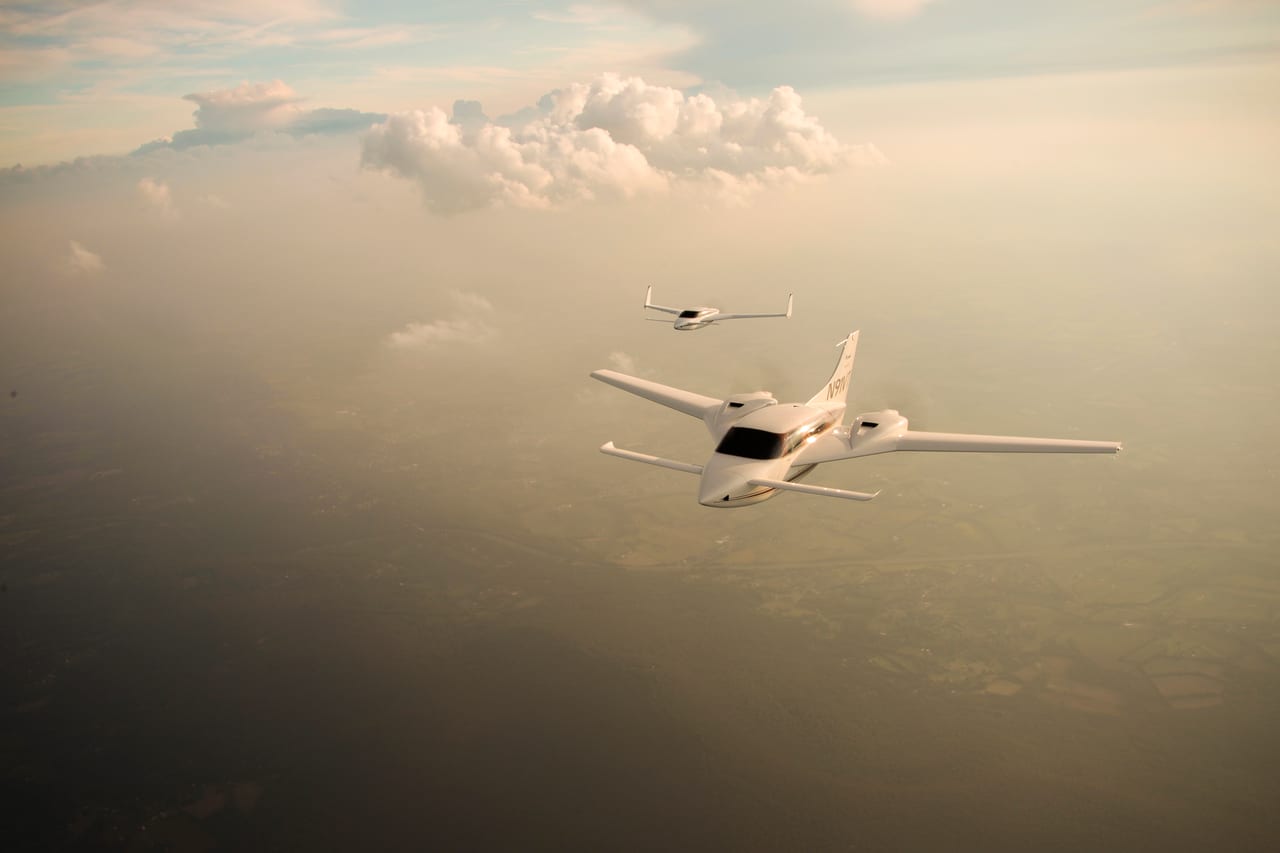
The Velocity V-Twin was designed to provide a safe and efficient transportation aircraft especially for those who fly at night, over mountains, over large bodies of water, serious IFR and those who just want the redundancy of a second engine to get them home or to an airport in the event of an engine failure. One of the design goals was to provide a twin engine aircraft that does NOT have the “stall/spin” problems associated with most twin engine aircraft. Think of it this way: Should you lose one engine of a conventional twin during the most critical departure point when the airspeed is low and in a climb attitude, panic will set in and often the pilot will not initiate the essential elements of an engine out procedure. He now finds that it takes full rudder to keep the airplane from yawing, airspeed is decaying and a turn back to the runway can result in the lowered wing to stall. Not much different than most airplanes where you use full rudder and slow the airplane down to a stall resulting in a spin. Key decisions used in a twin are: “identify,” “verify,” and “secure.” Identify the engine that failed by using the dead foot, dead engine terminology, verify by retarding the throttle that represents the dead engine and then secure the dead engine by feathering the propeller and shutting off the fuel to that engine. Struggling all at the same time to maintain a safe flying speed and keeping the airplane from crashing into the trees or other obstacles on the departure path.
Here is what is different in our V-Twin. The canard design results in the canard stalling before the main wing can reach a critical stall angle. The nose will bob up and down but the wing continues to fly. The end result is that IF you can’t stall the main wing, you can’t spin. This gives the pilot time to identify, verify and secure even if his air speed decays to the point where the canard does the bob up and down thing. Our power to weight is higher than most conventional twins thus giving us a better rate of climb should an engine fail.
Length Overall: 22'
Height: 7' 10"
Wheel Base: 110"
Track Width: 80"
Wingspan: 34'
Canard Span: 188"
Main Wing Area: 132.5 Sq Ft
Canard Wing Area: 22.8 Sq Ft
Total Wing Area: 155.3 Sq Ft
Fuel Capacity: 95 Gallons
Design Load Factors: +6/-6
Tested Airframe Load: +6 G-Load
V-Twin ENGINE Specifications
Engine: Lycoming IO 320 · Lycoming IO 360 · Titan IO 370 · Deltahawk Diesel · UL520T
Horsepower: 160 hp · 180 hp · 190 hp · 180 hp · 220 hp
Empty Weight: 2000 lbs · 2020 lbs · 2020 lbs · 2240 lbs. · 2100 lbs.
Gross Weight: 3200 lbs · 3400 lbs · 3400 lbs · 3440 lbs. · 3400 lbs.
Useful Load: 1200 lbs · 1380 lbs · 1380 lbs · 1200 lbs. · 1300 lbs.
Wing Loading at Gross: 19 psf · 21 psf · 21 psf · 21 psf · 21 psf
Cruise Speed at 75%: 185 ktas* · 200 ktas* · 205 ktas* · 250+ ktas* · 230+ ktas*
Fuel Burn @ 65%: 13 gph total · 16 gph tota · 18 gph total · 12 gph total · 19 gph total
Range at 65%: 1400 NM · 1150 NM · 1150 NM · 1900 NM · 1150 NM
*Expect a 5-7% knot decrease in cruise speed with fixed gear variant
Anchor 1